
Learn everything about Pomerol Bordeaux Wine in our complete Pomerol guide. Here you find detailed profiles on all the best wines and wineries in the appellation, with wine tasting notes, histories, top ten facts about Pomerol wine, description of its wines, vineyards, and terroir along with easy tips on wine and food pairing with Pomerol and wine buying tips, plus a look at the character and style of Pomerol wine.
If you want to read about other Bordeaux wine producers in different Bordeaux appellations: Links to all Bordeaux Wine Producer Profiles If you are interested in learning more about Bordeaux wine, we offer numerous articles on everything about Bordeaux wine, from a complete, detailed, history of the Bordeaux region and the famous 1855 Classification, the grapes used to produce Bordeaux wine and even vintage summaries covering Bordeaux wine from 1900 to today: All About Bordeaux Wine Guide
The complete guide to all the best chateaux, wines, vineyards and producers in Pomerol:
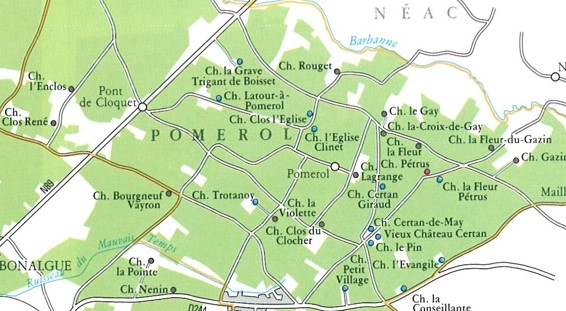
Map of Pomerol Vineyards and Chateaux
- Beauregard
- Bonalgue
- Bon Pasteur
- Bourgneuf
- Certan de May
- Clinet
- Clos du Clocher
- Clos L’Eglise
- Clos Rene
- Fayat
- Feytit Clinet
- Gazin
- Hosanna
- L’Eglise Clinet
- Domaine de l’Eglise
- L’Enclos
- Enclos Tourmaline
- L’Evangile
- La Cabanne
- La Clemence
- La Conseillante
- La Croix de Gay
- La Croix du Casse
- La Croix St. Georges
- La Fleur de Gay
- La Fleur Petrus
- La Grave a Pomerol
- La Pointe
- La Violette
- Lafleur
- Lafleur-Gazin
- Latour a’ Pomerol
- Le Gay
- Le Moulin
- Le Pin
- Montviel
- Nenin
- Petit Village
- Petrus
- Plince
- Rouget
- de Sales
- Taillefer
- Trotanoy
- Vieux Chateau Certan
- Vray Croix de Gay
Overview of the Pomerol appellation: Pomerol is the smallest of all the major Bordeaux wine-producing appellations. There are only 800 hectares under vine in Pomerol, give or take a hectare here or there. The appellation is close to 3 kilometers by 4 kilometers.
Currently, close to 150 different chateaux produce Pomerol wine. As you can imagine, most Pomerol chateau is small. Of course, there are a few exceptions.
The largest Pomerol vineyard belongs to Chateau de Sales at 47.5 hectares. The smallest vineyard is Enclos Tourmaline, which was until recently, a scant .5 hectares of vines. Today, Clos 56, which is .6 hectares, and Clos St. Andre at .6 hectares are the two smallest vineyards in the appellation. On average, close to 350,000 cases of wine are produced in Pomerol each year, so as you can see, not much wine is produced.
The old adage proves true here, good things do come in small packages. Pomerol is the home for some of the most expensive, sought-after wines in the world. Petrus, Chateau Lafleur, and Le Pin are within walking distance of each other.
Yet, casual visitors to the region would not know it. There are no properties with a grand chateau. The area is humble and charming. Some of the top chateaus do not have signs or markings of any type on their property to let you know you are there, or even how to get there.
History of Pomerol: Pomerol is one of the world’s most collectible wine regions. But this is a recent phenomenon in many ways. First, while the closest region geographically, St. Emilion, was first planted by the Romans, what was to become Pomerol was ignored.
When St. Emilion began producing wine in the early 1300s and exporting the wines to England, Pomerol remained an afterthought, as the region was not yet fully under vine.
However, some early vineyards could have been established during the 1300s, which would make sense as that matches up with the dates that the commercial city of Libourne was founded by the British. The city of Libourne has another connection with Great Britain, it was named Sir Roger de Leybourne from England.
Pomerol began to develop as a wine-producing commune in the 1700s. At that point farmers slowly began switching their crops from wheat and produce, to growing grapes for wine. Because the clay, gravel, and sandy soils were so poor, this was a propitious move, as it was difficult to grow much of anything else.
At the start of the 1700s, only a small amount of Pomerol was under vine. Cabernet Franc was one of the early grapes planted in Pomerol along with grapes to produce white wine. The introduction of Merlot as the main varietal for the appellation took place a little later, thanks to the owner of Chateau Rouget, Louis Fontemoing.
By the end of the 18th century, over 400 hectares were thriving with grapevines. By the early 1800’s Pomerol was an active wine-producing appellation. The production of white wine was mostly phased out in Pomerol by some point in the early to mid-1800s.
While producers were busy creating grand monuments and legendary chateaux in the Medoc during the early 1700s, Pomerol was not considered much of an appellation at the time. The perception at the time was that Pomerol was at best able to produce ordinary, simple wine. It took over 100 years for the region to develop and gain notice.
Pomerol, due to its unique soil composition and the fact that it was located close to the bustling, business district of Libourne, with access to shipping by train or boat was ripe for the development that eventually took hold.
Slowly but surely, the wines of Pomerol began earning a reputation, at least in the Dutch marketplace and with the locals in the Right Bank of Bordeaux.
La Conseillante and L’Evangile were the first two Pomerol wines to garner attention. That success was followed by Petit Village, Trotanoy, and Vieux Chateau Certan. Petrus had not yet been created.
The next important step in the development of Pomerol wines came when the train from Libourne to Paris was completed in 1853. Now the wines of Saint Emilion and Pomerol had much easier access to Bordeaux wine lovers all over the continent! In 1878, Pomerol began attracting more notice when their wines earned medals at the important Paris Exhibition.
Pomerol, like all of Bordeaux, was not able to escape the ravages of Phylloxera. It took decades for the appellation to replant and get back up to speed. In 1900, the Pomerol Growers association was formed. They created firm boundaries for the appellation by 1928.
Creation of the Pomerol appellation: In 1936, the official AOC laws were drawn up for Pomerol by the INAO. At that point in time, it was agreed by AOC that only Merlot, Cabernet Franc, Cabernet Sauvignon, and Malbec were suitable for the terroir and thus allowed for planting in Pomerol vineyards.
It was also agreed that all Pomerol producers, with a few exceptions, were required to make their wines at their chateau, which must be located within the boundaries of the appellation.
Like everything in life, there were a few exceptions that were grandfathered in, allowing a handful of wineries to make their wine in a separate appellation.
That changed in 2013 when a French court ruled that the 9 chateaux, known collectively as Les Bannis de Pomerol, would need to make all their wine within the Pomerol appellation by 2018 without exception. If not, they would no longer be allowed to feature or use the name of Pomerol appellation or its logo on their labels.
That order was overturned and at this point in time, the current court order is that all wineries in Pomerol must produce their wine within the boundaries of the appellation by 2021.
Pairing Pomerol wine with food: Pomerol, with its sensuous textures, rich flavors, and soft tannins is an easy wine to pair with food.
Pomerol goes well in wine and food matching with the majority of braised, roasted, or grilled meats ranging from beef, veal, pork, and game. Pomerol pairs perfectly with rare Ahi Tuna, Salmon, and of course with roasted chickens, mushrooms, truffle, and any other earthy dishes. Matching Pomerol wine and cheese is another example of perfect wine and food pairing.
The Top Ten Facts You Need to Know about Pomerol
#1 Pomerol is the only major Bordeaux appellation that is not classified.
#2 Pomerol is the home of the three most expensive wines in all of Bordeaux, Petrus, Lafleur, and Le Pin.
#3 Pomerol is the only wine-producing region in the world with a large concentration of blue clay in its soils.
#4 Growers used to produce white Bordeaux wine in Pomerol until some time in the 1800s.
#4 Merlot and Cabernet Franc are the two most important grapes used to produce wine in Pomerol.
#5 Pomerol is the smallest, major appellation in Bordeaux with close to 800 planted hectares and about 150 producers and growers.
#6 Pomerol was the last of the top Bordeaux appellations to become fully planted. This took place by the mid to late 19th century.
#7 Pomerol is almost always the first of the major, Bordeaux appellations to begin harvesting.
#8 The best terroir in Pomerol is found on the famous Pomerol plateau with its concentration of clay and gravel soils.
#9 Merlot did not become the dominant grape in Pomerol vineyards until after the Phylloxera epidemic.
#10 Pomerol was the last important Bordeaux appellation to gain worldwide fame, with prices to match. This took place following the legendary 1982 vintage.
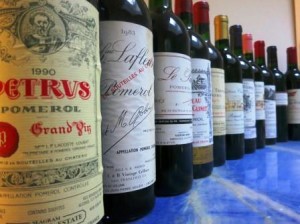
Pomerol and the start of the modern era: Even though wine from Pomerol slowly began to earn a reputation at the start of the 20th century in new markets, the region did not become widely famous for decades. Belgium was one of the first and most important markets for Pomerol.
Aside from the ease to ship the wines to neighboring Belgium, the large number of negociants located in the country made it easy to bottle and distribute the wines. At the time, most Pomerol producers had not even considered bottling much of their production. Selling the wine in barrels to negociants was a much easier and more profitable path to take.
The 1940s and 1950s were kind to Pomerol. Astounding wines were produced in 1945, 1947, 1948, 1949, 1950, 1953, 1955, 1959, and 1961! Many of those vintages produced several of the most legendary and expensive wines of the century!
Like all of Bordeaux, Pomerol was almost completely destroyed by the frost of 1956 and needed to be completely replanted. It’s amazing to think that the quality of wines produced in 1959 and 1961 came from very young vines!
While the devastation caused by the 1956 frost was tragic, it was good for many Pomerol growers in long run. The growers began planting more Merlot and removing Cabernet Sauvignon that was better suited for the Medoc.
The quality of wines produced in 1989 and 1990, when many of the Pomerol vines were starting to enter into maturity owe a debt of gratitude to the replanting of the appellation.
Robert Parker and Pomerol: 1982 is the next important date in the Pomerol timeline. By 1982, much of the wine from Pomerol was still being exported to Belgium and Switzerland or enjoyed by the local, Right Bank population.
1982 brought international fame not only to Pomerol but also to the now-famous wine consultant Michel Rolland and the wine writer, Robert Parker.
All three stars rose to prominence with the fame of the 1982 vintage. In part, after 1982, thanks to the continuous glowing reports from Robert Parker, Pomerol wine became instantly popular all over the world.
That was the year that prices began to soar for wines like Petrus and Lafleur. While Petrus had been expensive for decades, selling for the same price as First Growth Bordeaux, it was not the cult superstar it is today.
Following the 1982 vintage, prices and demand for Pomerol exploded and so did the fortunes of the young consultant Michel Rolland and Ets. Moueix, who continued adding estates and vines to their already massive portfolio.
Jean Pierre Moueix and Pomerol: While Robert Parker helped popularize the Pomerol region, along with other Right Bank wines, it was the singular drive and vision of Jean Pierre Moueix that gave the wines of Pomerol the biggest boost in the world market. Jean Pierre Moueix started his business in 1937.
His tireless efforts to promote the wines from the Pomerol region and his ownership of Chateau Trotanoy, Chateau Lafleur Petrus, and eventually Petrus, along with numerous other Pomerol estates gave him the position of the unofficial spokesperson for the Pomerol appellation.
Prior to Jean Pierre Moueix, Pomerol was barely noticed outside of a few export markets. It was the drive and ambition of Jean Pierre Moueix that the wines of Pomerol to the attention of numerous new markets and consumers in countries that were previously unaware of the quality, character, and style of Pomerol wine.
The best vintages of Pomerol are: 2022, 2021, 2020, 2019, 2018, 2017, 2016, 2015, 2014, 2012, 2010, 2009, 2008, 2006, 2005, 2001, 2000, 1998, 1995, 1990, 1989, 1985, 1982, 1975, 1970, 1964, 1961, 1959, 1955, 1953, 1952, 1950, 1949, 1948, 1947 and 1945. To read about vintages from Pomerol and all the other Bordeaux appellations Bordeaux Vintage Charts 1959 Through Today
If you are interested in reading more detailed information on vintages for Pomerol and other Bordeaux appellations, please read: Bordeaux Year to Year Detailed Vintage Reports 1900 to Today
Grapes planted in Pomerol: Pomerol, along with St. Emilion, is where you’ll find the majority of vines devoted to Merlot. In St. Emilion, many producers rely on Cabernet Franc as well.
While Cabernet Franc is blended into most Pomerol wines, it is the character of the Merlot grape that gives the wine of Pomerol its sensuous, elegance. There is a smattering of Cabernet Sauvignon planted as well as a very, small amount of Malbec too.
Neither of those two two grape varieties is popular in Pomerol today. On average, when you look at the entire 800 hectares of the Pomerol appellation, it is planted to 70% Merlot, 25% Cabernet Franc and 5% Cabernet Sauvignon.
Perhaps the region has less than 5% Cabernet Sauvignon and there is a smattering of Malbec vines planted in the Pomerol commune as well.
In large part, the combination of the percentages of grape varieties cultivated and the terroir is what determines The difference between Right Bank wines and Left Bank wine. It is also important to recognize that the uniqueness of the Pomerol terroir lends itself perfectly to Merlot because here, the grape is early ripening.
It is important to recognize that in part, what makes the Merlot in Pomerol much better than Merlot planted in any other wine region is that due to the terroir of Pomerol, the grape there is early ripening. This is not the case with many other leading viticultural regions. That is why the Merlot in Pomerol is able to obtain such a high level of sweetness and retain its acidities.
However, in 2021, Jean Luc Thunevin began producing a tiny amount of white wine at Le Clos du Beau Pere becoming the first vineyard in well over 100 years to make white Bordeaux wine in Pomerol!
The terroir and soil of Pomerol: The Pomerol appellation and its boundaries were officially created in 1928. It remains unchanged since that time. Pomerol, which is located just due west of St. Emilion has a variety of different terroirs and slopes that range in quality and help create a myriad of diverse expressions found in Pomerol wine.
It’s the uniqueness of the divergent terroirs and soils that give birth to the different styles of Pomerol. The easiest and simplest way to look at Pomerol is to divide it into three parts. The plateau of Pomerol, the slopes along the side of the plateau, and the flat parcels of terroir following the slopes.
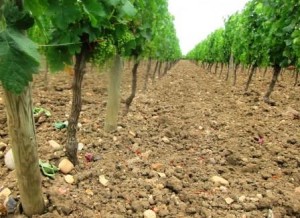
The best estates are located on what is referred to as the Pomerol plateau. The terroir of the Pomerol plateau is filled with different types of clay, gravel, and iron deposits in the soil.
The Pomerol plateau, located in the northeast portion of the Pomerol appellation is roughly bordered by the road from Libourne to Montagne St. Emilion, the N89 to Perigueux, the Catusseau village, and the Barbanne river.
The clay-laden soils produce the richest, densest, most opulent, and flamboyant Pomerol wines. These are also some of the most expensive wines from the appellation as well.
The famous Pomerol plateau is home to all the best Pomerol producers. While the plateau of Pomerol might appear flat when you are there, the slopes in Pomerol allow for elevations that range from 7 meters up to 39 meters, (128 feet) at the peak of the Pomerol plateau.
The highest point in Pomerol is at Petrus, on what is known as the hill of Petrus. Even though the Pomerol plateau is compact, the quality of the terroir varies, due to differences in the soils, slopes, and exposures. The terroir of the Pomerol plateau is a complex blend of clay, gravel, sand, crasse-de-fer, and iron oxide.
The plateau has slopes, referred to as terraces. Depending on where you are in regards to the terraces and the plateau, you can find 2 to 3 levels of different terraces before you get to the flatter terroir.
The clay soils in Pomerol are unique. The types of clay found in Pomerol are what give many of the wines their sensuous, rich, and opulent character. Clay is produced from degraded limestone, which explains why you often find limestone and clay located in the same terroir.
This takes place because limestone is high in pH and calcium, which eventually breaks down due to time and erosion. Clay soils can contain a high, CEC, also known as Cation Exchange Capacity. That CEC is important as it allows the soil to help bring more nutrients into the grapevines.
Because of the relationship between limestone and clay, the clay possesses many of the chemical compounds and nutrients that add to the uniqueness of the terroir; including calcium, pH, and other trace minerals, that along with the CEC, help the soils to retain water and feed the vines.
This unique clay-dominated terroir of Pomerol, along with the plantings of Merlot makes it almost always the first major Bordeaux region to harvest. In some years, the ability to pick before the rains can give the appellation a leg up on the other Bordeaux communes.
Most recently, this took place in 2008 and again in 2012. History is filled with years that Pomerol, due to its propensity for early harvesting produced the best wine in Bordeaux.
2017, 2012, 2008, 1998, 1964, and 1950 are other examples of previous vintages where Pomerol shined above the other Bordeaux appellations because the region was the first to harvest.
The blue clay of Pomerol: There are several types of clay in the soils of Pomerol. But the famous blue clay of Petrus is considered the best terroir in the entire Pomerol.
The button or circle of blue clay resides in an inexact circle in the northeast corner of the Pomerol plateau. What makes the most famous wine of Pomerol and Petrus, unique, is that the vineyard is planted on close to 100% blue clay.
This blue, smectite clay only exists at Petrus. No other vineyard in the world has that wealth of blue clay. The blue clay, which is estimated to be close to 40 million years old, is incredibly dense, making it almost impossible for the vines to penetrate.
In wet vintages, the clay acts as a sponge, with an incredible ability to expand and retain water. The ability for water retention must be balanced by effective drainage systems and gravel, which is exactly what happens at Petrus and the other top vineyards with blue clay.
The water molecules are able to penetrate the interlayer, molecular spaces of the clay. When the dry summer months arrive, the vines are still able to feed on the much-needed moisture. The clue clay of Petrus creates grapes with the highest level of tannins in Pomerol and for most of Bordeaux, while at the same time, producing tannins that are also among the softest in texture.
Petrus is the only Pomerol producer with close to 100% of their vines centered on buttonhole of Smectite clay. However, other estates located in the general vicinity have some of their vines planted on that small area of blue clay as well, including Vieux Chateau Certan and L’Evangile.
To get an idea of how the soil and terroir of Pomerol compares with St. Emilion and the other important appellations in Bordeaux; The terroir and soil of Bordeaux
Clay is not the only soil found in the best Pomerol terroir. There is also chateaus producing some of the best wines in the Pomerol appellation with gravel and clay soils. The gravel in Pomerol, unlike the stones found in the Medoc, does not run deep. Underneath many of the best terroirs, you will also find deep clay soils.
The gravel and clay terroir is perfect for Pomerol. Chateau Lafleur is perhaps the most famous of all the gravel terroirs. Its closest neighbor, La Fleur Petrus is also situated on gravel soils as is portions of Chateau Trotanoy.
The gravel soil located close to Cheval Blanc is another great Pomerol terroir. La Conseillante and L’Evangile are two examples of vineyards producing stunning wines from that Pomerol sector.
The vineyards in this sector of Pomerol are quite close or even border St. Emilion. The gravel soils often produce a fresher, softer, more refined, and elegant, as well as sensuous style of Pomerol.
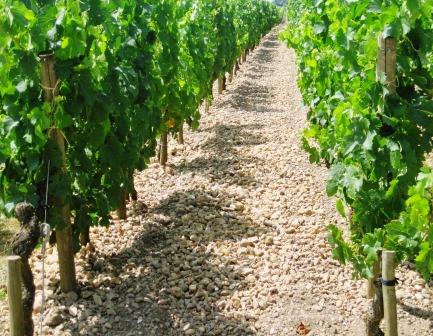
There are also terroirs in Pomerol with various amounts of sand, along with clay and gravel in their soils. The vineyards in the sandy soils usually produce a lighter, less ripe, and less interesting style of Pomerol that is often best consumed in its youth.
The sandy soils, with larger deposits of sand as part of their terroir, generally speaking, produce a bright, lighter, less dense style of Pomerol.
The sandy soils can at times ripen earlier than the clay terroir. This can be a help if vintage experiences late seasonal rains. Wet vintages are difficult for vineyards at the bottom of the terraces in the sandy terroir, as excess water might not drain easily.
However, while the vineyards with sandy soils will always produce lighter styles of wine, all sandy terroirs are not alike. The vineyards with clay underneath the sand, as well as gravel combined with sand can produce some very fine, Pomerol wines.
Today, more Pomerol estates continue adopting organic and biodynamic farming. In late 2021, Pomerol became the first major appellation in Bordeaux to mandate a complete ban of pesticides or chemicals used for weed control.
Pomerol wine, taste, style, and character: As you have read, Pomerol produces a myriad of diverse wines in a variety of styles from different terroir and soils. From sandy soils, you’ll find lighter, more acidic wines with black and red fruit characters.
From the plateau, in the top vintages, the wines are sensuous and often hedonistic. The wines of Pomerol offer complex perfumes of truffles, chocolate, flowers, dark cherries, plums, and exotic spices.
There are also gravel-based soils and terroirs that blend clay, gravel, sand, and iron. At their best, the wines of Pomerol are concentrated, lush, opulent, exotic, and even decadent, with textures and aromatics that are not found in any other wine region in the world.
If you are going to visit the chateaux and vineyards in Pomerol, you should also read these 2 articles to help you better plan your trip: Where to Eat when visiting Pomerol and Bordeaux as well as Guide to the best hotels and other places to stay in Pomerol and Bordeaux
The Classification of Pomerol: Interestingly, with all its success and world-famous wines, Pomerol is the only major Bordeaux appellation that has never been classified.
However, for a period of time, an unofficial classification existed in the appellation and some estates added Premier Grand Cru to their labels. 11 estates were somehow classified with Grand Cru status. Another mild effort at the classification took place in 1936, following the creation of the Pomerol appellation.
Producers located on the Pomerol plateau were allowed to include “Haut Pomerol” on the label, which signified their vineyards were located in the best terroir in the Pomerol appellation. Today, the thought in Pomerol is that the market will classify the wines of Pomerol by price and demand.
I agree completely. The market will sooner or later always find the correct price. Over the past few decades, consumers have clearly discovered the wines of Pomerol.
The high demand for Pomerol wine, along with low production has made many wines very expensive. However, some top producers have not pushed their prices too far, too fast, giving consumers some strong buying opportunities in today’s marketplace.
Other wines, due to their extraordinary, high quality, small production, and worldwide fame are heart shockingly expensive! Pomerol is also the home of one of the few, Bordeaux properties devoted to the production of Kosher wine.
Domaine Roses Camille, managed by Christophe Bardeau is a new Pomerol vineyard, making Kosher wine, produced from 100%, old vine Merlot that was planted in the early 1950s. Not much is made as the vineyard is only 1 hectare, making it difficult to find. de Valois is another small Pomerol estate producing Kosher wine in the appellation.
Pomerol today: Prior to 1998, Pomerol, along with Margaux were neck and neck in a contest to win the award for the most underachieving, inconsistent, Bordeaux wine region. Numerous chateaux in both appellations with great terroir were not making the quality of wines they could have been producing.
That is no longer the case. Many producers in the Pomerol region have a new, spare no expense attitude to making the best wine possible today. Properties that previously made dull wine have recently picked up their game and are now making very nice wines, if not the best wines in their history.
For more on Pomerol, you can also read detailed information about other, smaller chateaux, wines and vineyards located in Pomerol as well as in other appellations here: Extensive Guide to the Smaller, Lesser Known Bordeaux Chateaux, Vineyards