
The Complete Pauillac Bordeaux Wine Guide provides you with everything you need to know about all the best Pauillac, wines, wineries, and winemakers.
Learn everything about Pauillac, top ten facts about Pauillac wines, a look at the character and style of the wines, complete, detailed profiles on all the best wines and vineyards, including wine tasting notes, information on vineyards, winemaking, histories, and wine buying tips for all the top wines and chateau in the Pauillac appellation.
Pauillac is possibly the most famous of all the Bordeaux wine-producing appellations.
If you want to read about other Bordeaux wine producers in different Bordeaux appellations: Links to all Bordeaux Wine Producer Profiles If you are interested in learning more about Bordeaux wine, we offer numerous articles on everything about Bordeaux wine, from a history of the Bordeaux region and the famous 1855 Classification, the grapes used to produce Bordeaux wine and even vintage summaries, covering Bordeaux wine from 1900 to today: All About Bordeaux Wine Guide
Complete Guide to the all the best Chateaux, wines, vineyards and producers in Pauillac:
Map of Pauillac Vineyards and Chateaux
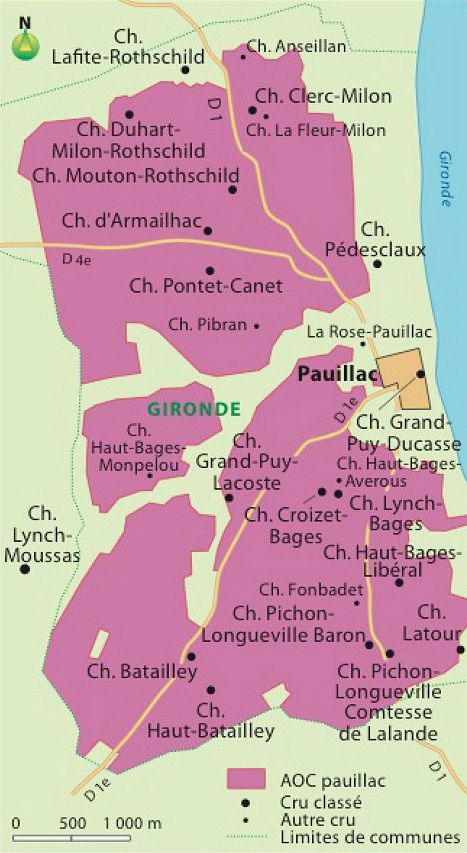
Overview of the Pauillac appellation: Pauillac has 1,199 hectares under vine. A total of 115 different chateaux maintain vineyards in Pauillac. Not all of those growers produce wine, as some prefer selling their harvest to cooperatives.
On average, 545,000 cases of wine are produced each year in Pauillac. It’s important to note, that while the number of Classified Growths in Pauillac is not subject to change, and the AOC boundaries of Pauillac are probably not going to change either, many of the top growths continue to purchase vines to augment the size of their estate.
This means the number of Cru Bourgeois estates is in decline as those vineyards are slowly being purchased by the more famous Classified Growths. However, much of that land that has gone on to increase the vineyard holdings of the top estates have more often than not, been included in their second wines, if the terroir was not equal to the production of the Grand Vin, which is often the case.
If you are going to visit the chateaux and vineyards in Pauillac, you should also read these 2 articles to help you better plan your trip: Where to Eat when visiting Pauillac and Bordeaux and Guide to the best hotels and other places to stay in Pauillac and Bordeaux
The taste, style and character of Pauillac wine: The style of Pauillac wine is what many think of as textbook Bordeaux wine. The wines of Pauillac are rich, full-bodied and tannic. They have the uncanny ability to combine a regal character, with a sense of sternness and elegance.
They gracefully combine elegance with power coupled with complexity. The notable flavors of cassis, blackberry, tobacco, cigar box, spice, earth, lead pencil, cedarwood and wet forest aromas coupled with powerful wines, firm tannins, and regal bearings are what many people expect from Bordeaux, especially from the Left Bank.
Pauillac with wine and food: The character and style of Pauillac help create great wine and food pairings, especially when Pauillac ages and takes on Truffle and other earthy, smoky attributes. The wine of Pauillac is perfect when paired with rare, grilled beef.
Pauillac also makes a great match with most roasted, braised, or grilled meats like veal, pork, chicken, and game as well as dishes with mushroom or earthy, truffle flavors. Wine from Pauillac also works extremely well with many different types of soft and hard cheese.
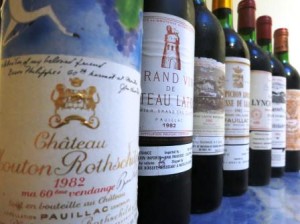
The Top Ten Facts You Need to Know about Pauillac
#1 Pauillac is the home to three chateaux that earned the distinction of being classified as a First Growth in the 1855 Classification of the Medoc.
#2 Pauillac produces the classic, text book style of wine most people associate with Bordeaux, due to its unique style pairing power, tannin, elegance, and longevity.
#3 Pauillac can produce the longest-lived wines in all of Bordeaux. In the best vintages, the top wines can age 100 years or longer!
#4 Pauillac has not only the largest city in the Medoc, but it also offers easy access to the local docks, making shipping of the wines easy, especially in the days of horses and wagons. This was part of the early development of the Pauillac appellation.
#5 Cabernet Sauvignon dominates the vineyard plantings in Pauillac, followed by Merlot, Cabernet Franc, Petit Verdot, Malbec, and Carmenere.
#6 Pauillac has 1,199 hectares under vine with a total of 115 different active growers in the region.
#7 Pauillac produces an average of 8,000,000 bottles of wine per year.
#8 Pauillac is separated from the Saint Julien appellation to the south by only a small stream and is bordered by Saint Estephe in the north.
#9 Many people consider the best terroir in the Left Bank to be the “l’Enclos” vineyard that is the heart and soul of Chateau Latour.
#10 Pauillac was first planted in the 1300s. But it took until the 17th century for most of Pauillac to become under vine.
The ability to age and cellar Pauillac wine: One of the key strengths to Pauillac is the wine has the ability to age and evolve for decades, in the right soils and vintages. It has been said the best Pauillac wines taste like “An iron fist in a velvet glove.”
That is an apt description of Pauillac wine. The top Bordeaux wines from the Pauillac appellation can age and evolve for decades and even up to a century or more! Depending of course on the vintage and how the wine is stored.
Classification of Pauillac wine: Pauillac is perhaps the most famous Bordeaux wine-producing commune in the Medoc. This is easy to explain. Pauillac is the home to 3 of the 5 First Growths, Chateau Lafite Rothschild, Chateau Latour, and Chateau Mouton Rothschild. Chateau Mouton Rothschild is the only wine to have been promoted since the original classification took place in 1855.
Mouton Rothschild is also the only First Growth that remains in the hands of the same family that owned the estate at the time of the original 1855 Classification. Aside from 3 First Growths, you will also find that two Second Growths also call Pauillac their home. Only one 4th growth is located in Pauillac.
But 12 chateaux, ranked as a Fifth Growth are situated in Pauillac! There is something else to consider, there was a time not that long ago when many Pauillac 5th growth estates were sold to consumers based on their previous reputations. That is not the case today.
Now, the vast majority of the chateau in Pauillac are pushing the envelope trying to produce the best Bordeaux wine possible. And not just the Fifth Growths, the two Pichon’s, Pichon Lalande and Pichon Baron are locked in a struggle to make the best Pauillac they can!
Aside from classified growths from 1855, 6 Cru Bourgeois classified chateau come from the Pauillac appellation with Chateau Pibran at the head of the pack.
With only 6 chateaux classified as Cru Bourgeois, Pauillac has the least amount of Cru Bourgeois estates of any other major Bordeaux appellation. Pauillac continues embracing organic and biodynamic farming techniques. In fact, Chateau Pontet Canet was the first classified growth to earn certification for being 100% biodynamic.
The best vintages of Pauillac are: 2022, 2021, 2020, 2019, 2018, 2017, 2016, 2015, 2014, 2010, 2009, 2008, 2006, 2005, 2003, 2000, 1996, 1995, 1990, 1989, 1985, 1982, 1961, 1959, 1955, 1953, 1949, 1948, 1945, 1929, 1928 and 1900.
There are certainly vintages where some chateau produced stunning wines of quality, well above their peers, while other estates in the same year did not produce wines at the level their terroir and the vintage allowed. For example, in 1986 Mouton Rothschild and Lafite Rothschild both made sublime wines. But the other estates did not produce wines at close to the same level of quality.
1990 is another interesting vintage in Pauillac because as an example, Pichon Baron and Lynch Bages both made better wine than the First Growths! To read about vintages from Pauillac and all the other Bordeaux appellations Bordeaux Vintage Charts 1959 Through Today If you are interested in reading more detailed information on other vintages for Pauillac and all the top Bordeaux appellations, please read: Bordeaux Year to Year Detailed Vintage Reports 1900 to Today
History of Pauillac: The initial vineyards in Pauillac were planted in the second half of the 13th century. However, in those early days, vineyards were far and few between. Cereal and other agricultural crops dominated the region at the time. It took until the late 1500s and then into the 17th century before serious amounts of vineyard plantings began to take place.
Once the Dutch helped drain the swamps, the cultivation of the Pauillac vineyards continued well into the 18th century. Aside from the exceptional terroir for grapes used in making Bordeaux wine, one of the main reasons Pauillac became popular was its proximity to the local ports in the Left Bank.
The ease of shipping was a major consideration when wine barrels needed to be moved by men, horses, and wagons. In fact, by the early 1800s, a myriad of merchants, brokers, winemakers, and other people associated with the Bordeaux wine trade began moving to Bordeaux, especially in the Pauillac area, near the water. Those reasons are part of how Pauillac became the largest city in the Medoc.
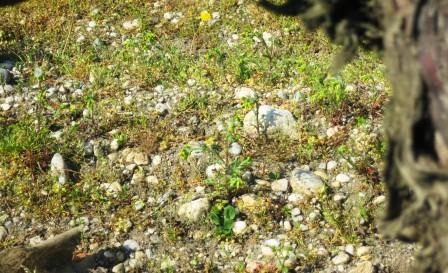
Terroir and soil of Pauillac: The more important reason Pauillac earned its reputation is for the wines. Of course, those wines could never have developed without the unique terroir and soils of the appellation.
Located just north of St. Julien and south of St. Estephe, Pauillac provides the perfect soils needed for Cabernet Sauvignon grapes to produce great Bordeaux wine.
The best vineyards have gentle slopes and hillsides with elevations ranging from 0 to 29 meters. The peak elevation in Pauillac is found on the Mouton plateau. Another element important to the terroir of Pauillac is its easy access to the water from the closely situated Gironde river.
In large part, the combination of the percentages of grape varieties cultivated and the terroir is what determines The difference between Right Bank wines and Left Bank wine.
Pauillac can be easily looked at as if it had 2 large areas. In the northern end, the land has slightly higher elevations with deep, gravel on top of sand, marl, and limestone. At the southern tip, there is a greater concentration of larger, gravel rocks and stones with more clay in the sub-soils.
These vineyards have more access to water from the Gironde estuary. You can further subdivide the terroir of Pauillac along the lines of a compass. At the lower southern end of the appellation, the soils in Pauillac feature gravel, rocks, and stones of various sizes and sand with deposits of iron in the clay.
The iron and clay give the soil a red, brown hue. The further north you travel, there are also various deposits of limestone, marl, larger rocks, stones, and the level of clay in the soil increases as well.
The gravel depths and slopes in the northern part of Pauillac are deeper and higher in elevation as well. To the west, when you move inland in Pauillac you find less gravel, smaller stones, and rocks with more sand in the soil.
The rocky, gravel soils found in Pauillac are perfect for grape growing because they naturally force the vines to delve deep into the soil, alternatively suffering, seeking and finding nourishment.
The complex terroir of Pauillac is aided by ample water when it’s a dry year, coupled with the ability for natural drainage in the wet, rainy years. While these poor soils are not fit for most agricultural products, they are perfect for grapes. On the north, there is the Gironde river.
The chateaux located closest to the river enjoy a slightly warmer microclimate, which aids in the maturity of the grapes. To the south, you have the Atlantic ocean. The chateaux with the finest terroir are located on properties with slopes, elevations, and deep gravel that are not far from the water.
The gravel, rocks, and stones assist with natural drainage, holds the warmth of the sun, reflecting its light and heat to the vines which help the grapes ripen.
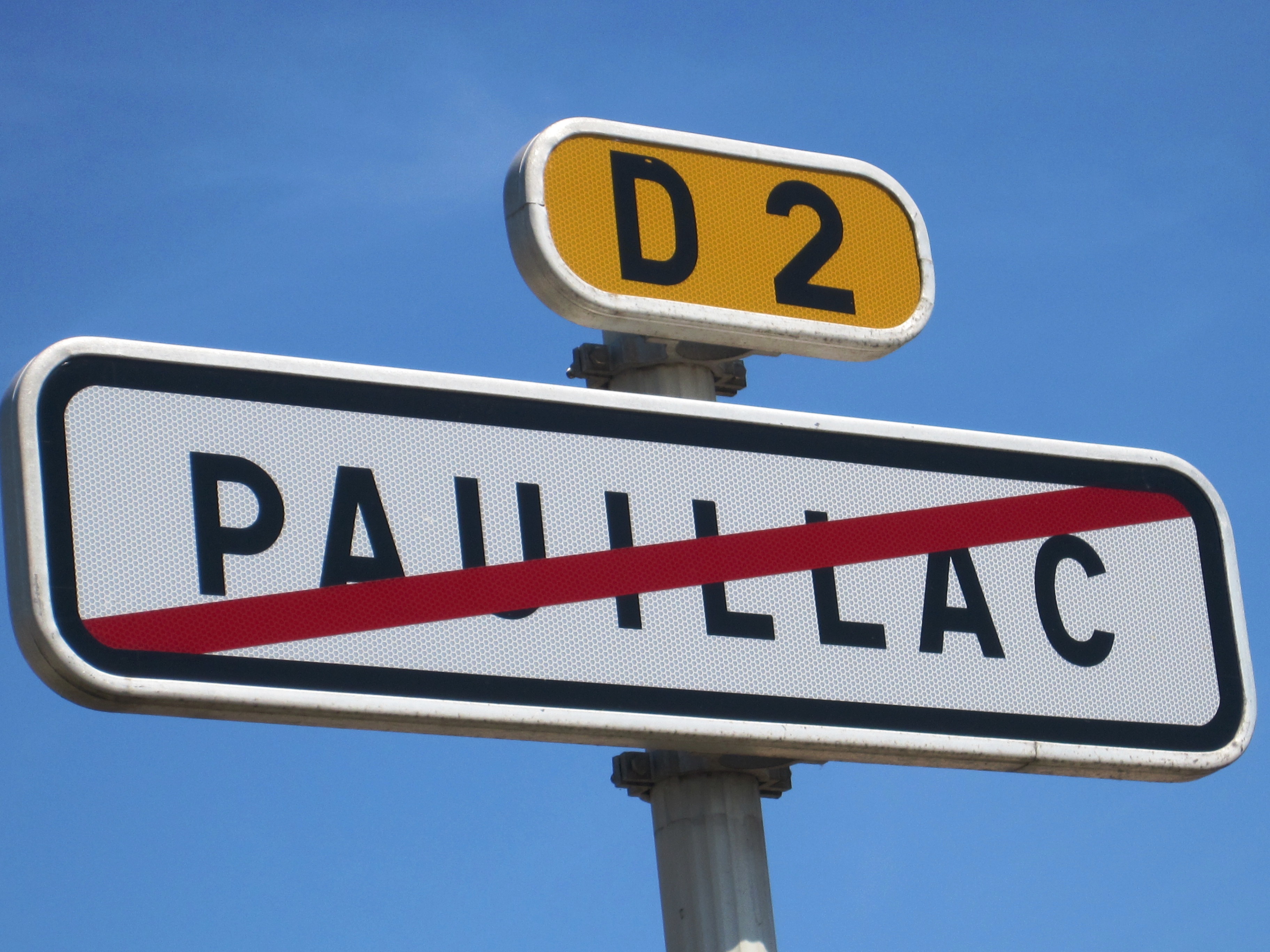
Most of the top chateaux in Pauillac are situated right off the main highway, the D2, also known as the Route du Meodc, or Chateau Row. Other great estates, like Chateau Grand Puy Lacoste are located off the D1, slightly more inland. To get an idea of how the soil and terroir of Pauillac relates to other appellations in Bordeaux; The terroir and soil of Bordeaux
The grapes of Pauillac: Pauillac vineyards are planted with all 6 Bordeaux red grape varietals. Cabernet Sauvignon is the most prevalent, followed by Merlot, Cabernet Franc, Petit Verdot, Malbec, and a few properties that maintain a very small amount of Carmenere.
small amount of white Bordeaux wine is produced in Pauillac by some chateaux as well. The white Bordeaux wines are made from primarily Sauvignon Blanc, Semillon and Muscadelle. The white Bordeaux wine comes from vines located in and outside the Pauillac appellation. The wines are classified, labeled and sold as Bordeaux Blanc. The two most famous white Bordeaux wines from Pauillac chateaux are Aile d’Argent from Mouton Rothschild and Blanc de Lynch-Bages from Lynch Bages.
Pauillac today: Pauillac is an exciting appellation from top to bottom these days. You no longer need to buy the First Growths to enjoy great Pauillac. Chateau Pontet Canet is on fire, producing wines that are equal to any of the Super Seconds, and possibly the First Growths as well.
Pichon Lalande and Pichon Baron remain locked in an eternal competition to see which can make better wine. Grand Puy Lacoste and Lynch Bages are not far behind. It’s an exciting time to be a Pauillac lover!
Pauillac AOC Laws and rules: According to the official decree of November 14, 1936, Bordeaux wine from the Pauillac AOC must: come from the commune of Pauillac, or one of the few, clearly marked parcels in the communes of Cissac, Saint Julien, Saint Estephe or St. Sauveur, to the exclusion of areas located in modern alluvial soils and sand over impermeable subsoil.
The wine is required to meet specific production conditions with regard to allowable grape varieties, minimum sugar content, alcoholic strength of at least 10.5%, and limited yields (reviewed each year). There is also a blind tasting of the wines to make sure they are Pauillac in character. However, it’s easy to see that any serious producer in the Pauillac appellation today produces wines well above the quality level and standards mandated by AOC law.
You can also read detailed information about other, smaller chateaux, wines, and vineyards located in Pauillac as well as in other appellations here: Extensive Guide to the Smaller, Lesser Known Bordeaux Chateaux, Vineyards