
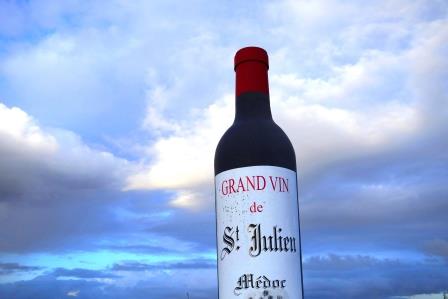
Learn everything about Saint Julien Bordeaux Wine in our complete guide with a history of the St. Julien appellation, a look at the character and style of the wines, top ten facts about St. Julien, and wine tasting notes for all the best wines, and wineries in Saint Julien.
We also offer detailed profiles for all the best estates and vineyards with histories of the properties, images, buying guides to the best wines, and tips for the best wine and food pairings for wines from Saint Julien.
If you want to read about other Bordeaux wine producers in different Bordeaux appellations: Links to all Bordeaux Wine Producer Profiles If you are interested in learning more about Bordeaux wine, we offer numerous articles on everything about Bordeaux wine, from a history of the Bordeaux region and the famous 1855 Classification, the grapes used to produce Bordeaux wine and even vintage summaries, covering Bordeaux wine from 1900 to today: All About Bordeaux Wine Guide
The complete guide to all the best Chateau, wines, vineyards and producers in St. Julien:
Map of Saint Julien Vineyards and Chateau
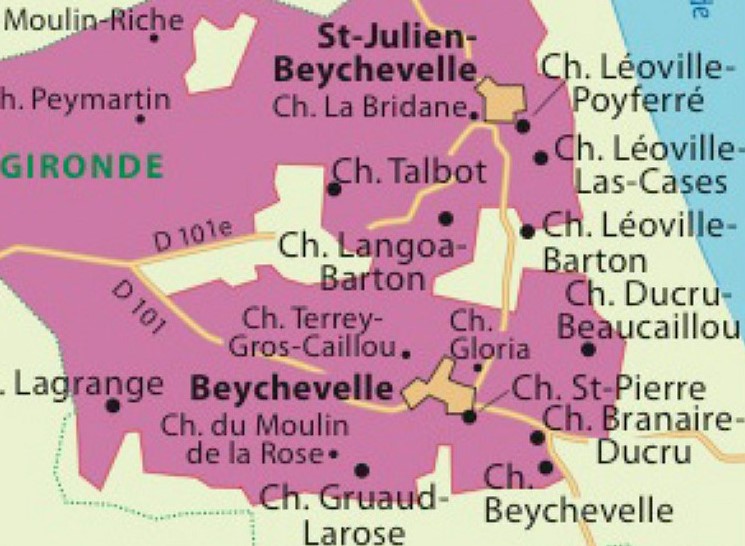
Overview of the St. Julien appellation: St.Julien is the smallest of the major Bordeaux appellations in the Medoc with 910 hectares under vine. On average, 450,000 cases of wine are produced each year in Saint Julien. But it’s important to keep in mind, great things come in small packages.
As far as classified growths in the Medoc goes, the St. Julien appellation has the highest ratio of classified terroir of any Bordeaux region. In fact, during the 1980s and 1990s, close to 85% of the vineyards in Saint Julien consist of classified terroir!
By 2015, with the larger, classified estates buying the land from the small estates, close to 95% of the entire Saint Julien appellation was classified!
Character and style of St. Julien wine: Saint Julien produces a myriad of different styles of Bordeaux wine in the Left Bank of Bordeaux. They can be powerful, tannic, and even masculine, which is what you find at Chateau Leoville Las Cases or the more traditionally made Chateau Leoville Barton.
Some of the wines from Saint Julien can be easily confused with Bordeaux wine from Pauillac, which is easy to understand as Pauillac and St. Julien are only a vine away on the northern side of St. Julien. Other Bordeaux wines from St. Julien are on the elegant, refined side of the style of range like Branaire Ducru.
There are Saint Julien estates that are able to majestically pair concentration with elegance and purity like the wines found at Chateau Ducru Beaucaillou. Some chateaux remain traditional in their winemaking, while others lean to a more modern approach, like St. Pierre. There are early drinking wines like Gloria and wines that demand decades in the cellar, for example, Leoville Las Cases.
Terroir and soil of St. Julien: The diverse array of wines and styles in the St. Julien appellation has as much to do with the winemakers and growers as it does with the terroir. The appellation of Saint Julien is almost rectangular in shape.
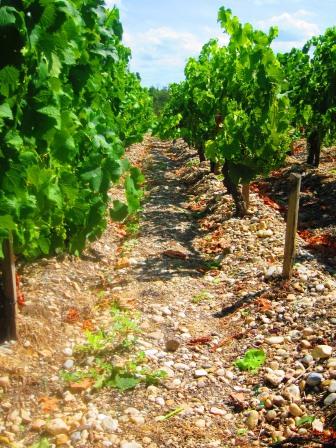
Bordered by the Gironde estuary on one side, the region is about 3.5 kilometers wide and close to 5.5 kilometers long. The St. Julien appellation has a terroir that offers soils with a mix of gravel, sand, limestone, and clay, as well as a wide variety of rocks and stones in a diverse array of different shapes and sizes.
You can further sub-divide the region using a compass with more gravel to the north and east. In the west and as you travel south and west, you encounter more sand, with smaller, gravel stones. In large part, the combination of the percentages of grape varieties cultivated in the region and the terroir, is what determines The difference between the wines of the Left Bank and those from the Right Bank.
The elevations in St. Julien range from 0 to 22 meters. The highest altitude on the plateau of St. Julien is located at Gruaud Larose. The gravel in the soils is a key element to what makes the wines of St. Julien so great. The gravel helps provide natural drainage in the wet years, reflecting sunlight, radiating warmth and heat to the vines which allows the vines to delve deep into the soils.
The best vineyards have gentle slopes with access to the Gironde river, which helps create a micro-climate. To get an idea on how the soil and terroir of Saint Julien compares to the other important appellations in Bordeaux; The terroir and soil of Bordeaux
Interestingly, because some land was owned by Chateau Ducru Beaucaillou and Chateau Beychevelle in the commune of Cussac in the Haut Medoc appellation at the time of the 1855 classification, 38 hectares of vines from Haut Medoc are allowed to be classified as coming from St. Julien.
This has been a source of irritation to other growers in Cussac that continually demand their vines become part of the Saint Julien appellation.
The growers with vines in both appellations must declare before picking if their vines will be sold as Saint Julien or Haut Medoc. Taking a wild guess, I’m not thinking those vines have even been sold as an Haut Medoc! Some of those grapes are placed into the Grand Vin, while others are used in second wines.
If you are going to visit the chateaux and vineyards in Saint Julien, you should also read these 2 articles to help you better plan your trip: Where to Eat when visiting St. Julien and Bordeaux as well as Guide to the best hotels and other places to stay in Saint Julien and Bordeaux
The grapes of St. Julien: The gravel-based Bordeaux vineyards of St. Julien are perfect for Cabernet Sauvignon. While all five of the major Bordeaux grape varietals are planted in Saint Julien, like most of the Medoc, Cabernet Sauvignon is King, followed by Merlot, which plays an important and very necessary supporting role. Lesser plantings of Petit Verdot, Cabernet Franc and Malbec can also be found.
St. Julien with wine and food pairings: There is something for every Bordeaux wine lover in the St. Julien appellation. The wines, in their diverse array of styles and personalities, offer a multitude of wine and food pairing ideas. The wines of Saint Julien evolve with time and develop complex notes of smoke, earth, tobacco, and truffle.
Those characteristics create great wine and food pairings. Like many red Bordeaux wines, the wine of Saint Julien is perfect with lamb, duck, game, chicken, and rare, grilled beef.
St. Julien wines also pair well with most roasted, braised, or grilled meats and dishes with earthy flavors like mushroom and truffles. Depending on the preparations, the wines of St. Julien can be enjoyed with a myriad of seafood dishes. Saint Julien wines are perfect with several types of soft and hard cheese.
Classification of St. Julien: While there are no First Growths to be found here, St. Julien is rich in the category of Super Seconds. Saint Julien boasts 5 Second Growths, 2 Third Growths and 4 Fourth Growth chateaux.
St. Julien has never been more exciting than it is today! Numerous estates are battling it out, trying to produce the best wine possible. The consumer is the clear winner as Leoville Poyferre strives to best Leoville Las Cases and Leoville Barton.
Chateau Ducru Beaucaillou tries to be better than all of them, and since the 2005 vintage, at least in this writer’s opinion has succeeded! Chateau Branaire Ducru is making wine well above its classification as well.
Following the 2008 vintage, Chateau Saint-Pierre has clearly upped their game making very good wine on a consistent basis. Only 6 Cru Bourgeois classified chateau previously come from the Saint Julien appellation of which Chateau Gloria and Chateau du Glana are easily the best of those.
In fact, there are vintages when Chateau Gloria has made better wine than you can find at some of the better known Classified estates! However, as of 2015, St. Julien is the only appellation in the Medoc without any estates included in the Cru Bourgeois classification.
History of St. Julien: Saint Julien first became famous for its Bordeaux wine back in the 17th century. At the time St. Julien was developing as a major, Bordeaux wine-producing appellation in the Left Bank, the entire area of the Medoc was being discovered, populated and planted by wealthy aristocrats.
Coinciding with creating the famous vineyards we know today, the new landowners quickly began erecting massive showpiece chateaux throughout the region. Many of the original Saint Julien estates are still standing today and can easily be viewed while driving down the famous D2 highway.
The Top Ten Facts You Need to Know about St. Julien
#1 St. Julien sandwiched between Margaux and Pauillac offers the best of both worlds, combining the elegance of Margaux with the power of Pauillac.
#2 St. Julien is the smallest of the major appellations in the Medoc with 910 hectares of vines.
#3 St. Julien is the home to the largest classified growth in the Left Bank with the 123-hectare vineyard of Chateau Lagrange.
#4 St. Julien has the distinction to have close to 85% of its land classified in the 1855 classification of the Medoc. This is more than any other appellation.
#5 St. Julien is perfect for Cabernet Sauvignon. The other important grape varieties planted in the appellation include Merlot, Cabernet Franc, Petit Verdot, and Malbec.
#6 A minor dispute is taking place between growers located in the Haut Medoc commune of Cussac that claim their vines should be included in the St. Julien appellation.
#7 Several of the original drainage ditches created by the Dutch to drain Bordeaux are visible off the D2 highway in St. Julien.
#8 Leoville Las Cases, Leoville Poyferre, and Leoville Barton were all part of the same estate when it was first created.
#9 St. Julien has the only chateau from the 1855 Classification of the Medoc that remains in the hands of the same family at the time it was classified. Leoville Barton is still the property of the Barton family.
#10 St. Julien is the home to the largest number of Super Second chateaux. A super Second wine is one where if a reclassification of the Medoc ever took place again, their wines would be considered for First Growth status.
The best vintages of Saint Julien wines are: 2022, 2021, 2020, 2019, 2018, 2017, 2016, 2015, 2014, 2012, 2010, 2009, 2008, 2006, 2005, 2003, 2000, 1996, 1990, 1982, 1961, 1959, 1953 and 1945.
However, for St. Julien, it’s not quite that simple allowing you to paint a broad stroke when it comes to ranking the vintages, especially when it comes to older vintages.
For example, some estates in the appellation were not making great wine during the 1940s, 1950s, 1960’s and 1970s due to a myriad of reasons. Today, clearly that is not the case as all the producers in Saint Julien are striving to make truly sublime wines.
To read about vintages from Saint Julien and all the other Bordeaux appellations Bordeaux Vintage Charts 1959 Through Today If you are interested in reading more detailed information on other vintages for St. Julien and all the other top Bordeaux appellations, please read: Bordeaux Year to Year Detailed Vintage Reports 1900 to Today
In blind tastings, it’s easy to confuse St. Julien with Pauillac. Some estates’ share similar terroir. In fact, the vineyards of Chateau Leoville Las Cases abut the vineyards of Chateau Latour. The top Bordeaux wines of the Saint Julien region are meant to age, in order to display their full level of complexities and unique characteristics.
It’s not just Pauillac that can remind tasters of St. Julien, Margaux can also seem similar to St. Julien from some of the more concentrated, tannic wines. Perhaps this is due in part to the fact that St. Julien lies sandwiched between Pauillac to the north and Margaux to the south.
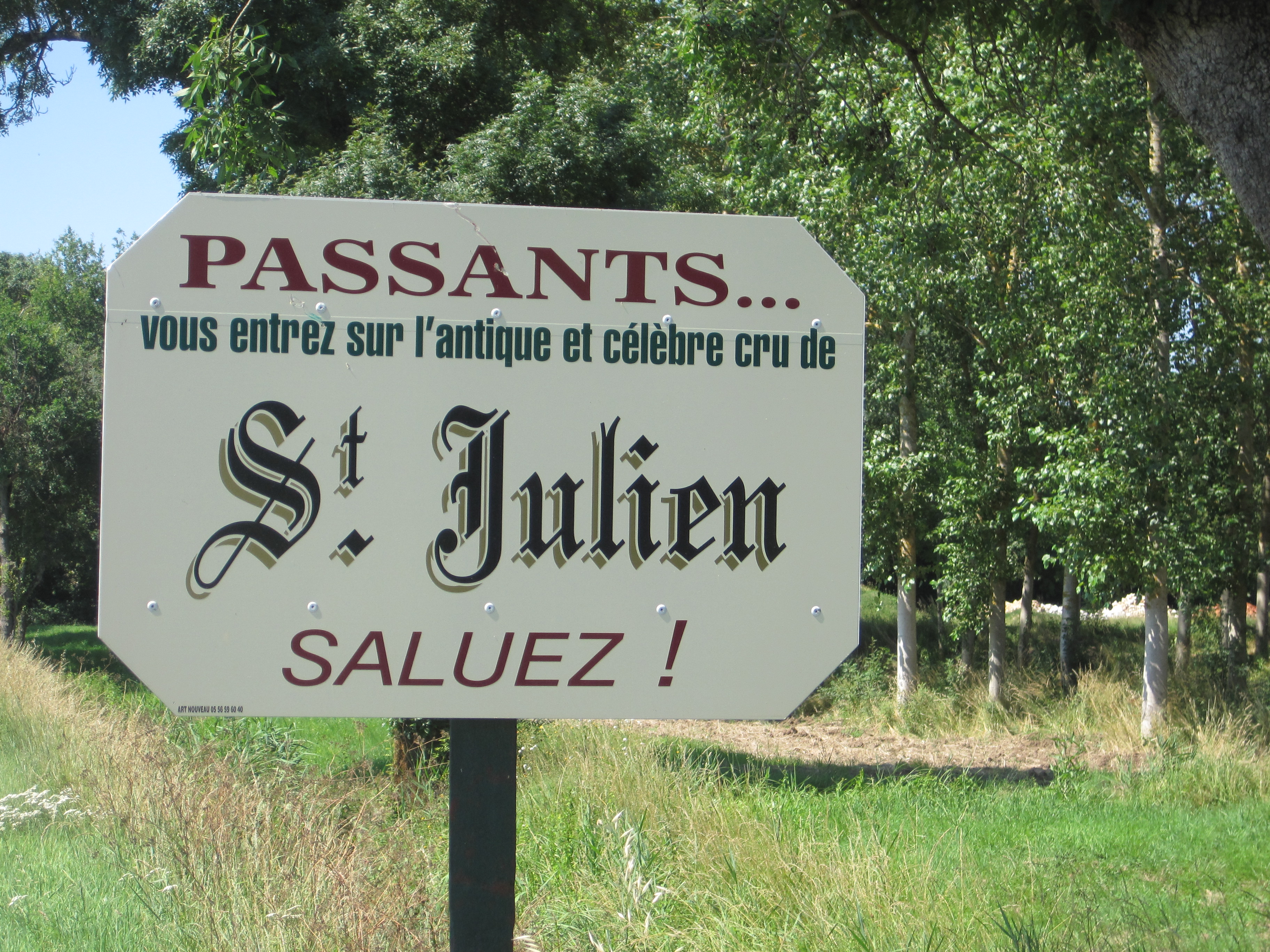
Geographically, St. Julien is situated in the middle of two important appellations in the Medoc. Margaux is to the south and Pauillac borders the region in the north. The port of Beychevelle is right there, which helped with the ease of shipping in the formative years.
In the 1855 classification, a total of 5 chateau earned coveted status as a Second Growth: Ducru Beaucaillou, Gruaud Larose, Leoville Barton, Leoville Las Cases and Leoville Poyferre .
AOC Law and Rules for St. Julien: What does it take to be a Saint Julien wine? According to the decree of November 14, 1936, the St. Julien AOC wines must meet precise production conditions: grape varieties, minimum sugar content, alcoholic strength 10.5% alcohol and limited yields. There is also a yearly blind tasting of each new vintage produced in the appellation.
Interestingly, a few producers in the St. Julien appellation produce a small amount of white wine. Chateau Lagrange is one of the few St. Julien properties to produce a white wine. The wine is blended from approximately 60% Sauvignon Blanc, 30% Semillon and 10% Muscadelle.
Chateau Talbot also makes a limited amount of white Bordeaux wine. Because it is against the rules of the AOC, white Bordeaux wine from Saint Julien chateau is sold as generic, AOC Bordeaux Blanc wine.
You can also read detailed information about other, smaller chateaux, wines, and vineyards located in St. Julien as well as in other appellations here: Extensive Guide to the Smaller, Lesser Known Bordeaux Chateaux, Vineyards